
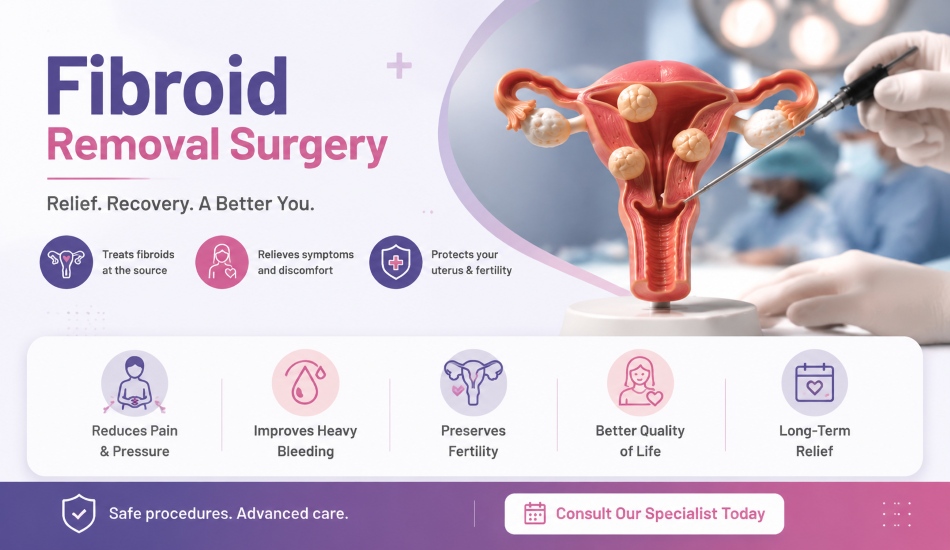
Fibroid removal surgery, medically known as a myomectomy, removes uterine fibroids while preserving the uterus. It is the recommended treatment when fibroids cause heavy menstrual bleeding, pelvic pain, pressure symptoms, or fertility concerns that have not improved with monitoring or medication. At Dr Law Wei Seng’s clinic in Singapore, fibroid removal is performed using minimally invasive laparoscopic techniques wherever possible, with the goal of preserving fertility, minimising scarring, and shortening recovery time.
Dr Law Wei Seng — Your Fibroid Removal Specialist in Singapore
Dr. Law Wei Seng, Obstetrics and Gynaecology Specialist, MBBS (Singapore), MRCOG (UK), Member, Royal College of Obstetricians and Gynaecologists.
Dr Law has over 20 years of clinical experience in obstetrics and gynaecology, with a special interest in minimally invasive gynaecological surgery. He has performed more than 2,000 laparoscopic surgeries, including laparoscopic and single-incision myomectomies for fibroids of varying size and complexity. Dr Law practises at Mount Elizabeth Novena Hospital and holds affiliations with Gleneagles Hospital, Farrer Park Hospital, Parkway East Hospital, Mount Alvernia Hospital, and Thomson Medical.
His approach to fibroid removal prioritises three things every patient asks about: minimising pain and scarring, preserving fertility wherever it is medically appropriate, and helping you make an informed decision about which surgical approach genuinely suits your situation, not a one-size-fits-all recommendation.
What Is Fibroid Removal Surgery (Myomectomy)?
A myomectomy is a surgical procedure that removes one or more uterine fibroids while leaving the uterus intact. This distinguishes it from a hysterectomy, which removes the entire uterus. Myomectomy is generally the preferred option for women who wish to preserve their fertility or who simply want to keep their uterus, while hysterectomy may be considered when fibroids are extensive, symptoms are severe, and future pregnancy is not a concern.
Not every fibroid requires removal. Surgery is typically recommended when fibroids are causing heavy menstrual bleeding, anaemia, pelvic pain or pressure, fertility difficulties, or are growing rapidly. The right approach depends on the size, number, and location of your fibroids, as well as your symptoms and pregnancy plans.
Types of Fibroid Removal Surgery
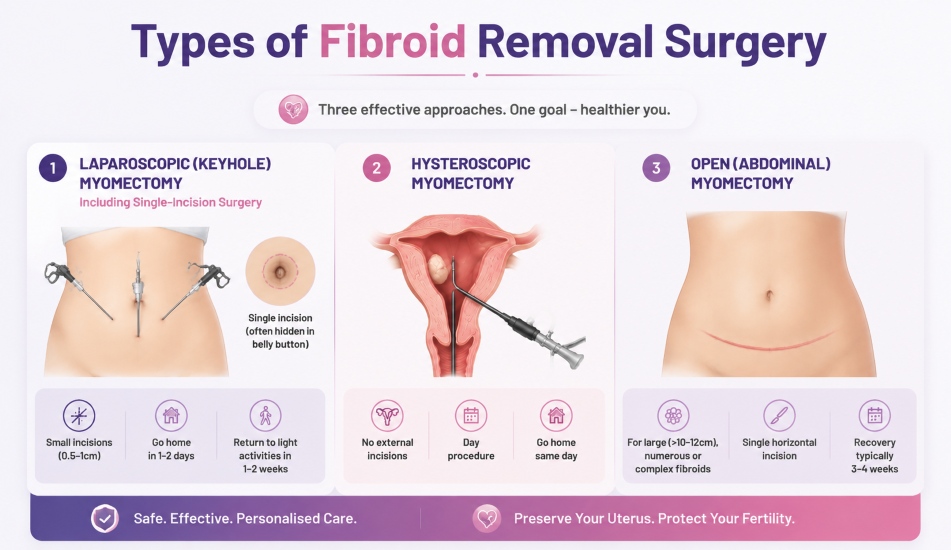
There are three main surgical approaches to fibroid removal. Your specialist will recommend the most suitable option after reviewing your ultrasound or MRI findings.
1. Laparoscopic (Keyhole) Myomectomy — Including Single-Incision Surgery
Laparoscopic myomectomy is performed through small incisions in the abdomen, typically 0.5 to 1cm each, using a laparoscope and fine surgical instruments. The fibroid is removed and, where necessary, broken into smaller pieces (morcellated) so it can be extracted through the small incisions.
Dr Law has particular expertise in single-incision laparoscopic surgery (SILS), where the entire procedure is performed through a single small incision, often hidden at the belly button or discreetly placed below the bikini line. Compared with conventional laparoscopy, this technique may offer less visible scarring and a faster recovery, though it requires a higher level of surgical skill and is not suitable for every case.
Most patients undergoing laparoscopic myomectomy go home within one to two days and resume light activities within one to two weeks, with fuller recovery by four weeks.
2. Hysteroscopic Myomectomy
For fibroids growing within the uterine cavity (submucosal fibroids), a hysteroscopic approach may be used. This procedure is performed entirely through the vagina and cervix using a hysteroscope, with no external incisions at all. It is typically done as a day procedure, with most patients returning home the same day and recovering within a few days.
3. Open (Abdominal) Myomectomy
When fibroids are very large (generally above 10–12cm), extremely numerous, or located in technically difficult positions, an open myomectomy may be the safer and more complete option. This involves a single horizontal incision, similar in position to a Caesarean section scar. Recovery takes longer — typically three to four weeks — but this approach allows the most thorough removal of complex fibroids in a single operation.
4. Considering a Non-Surgical Option First?
Not all fibroids require surgery. Options such as hormonal medication, GnRH agonists, or uterine artery embolisation may be appropriate for some patients, particularly where symptom relief rather than fertility preservation is the main goal.
Read more about these alternatives in our guide to uterine fibroid symptoms and treatment options, or discuss your specific situation with Dr Law to determine whether surgery is the right next step for you.
Cost of Fibroid Removal Surgery in Singapore
Fibroid removal surgery is listed under the Ministry of Health’s Table of Surgical Procedures (TOSP) under fee category 5A, which determines applicable MediSave withdrawal limits. At private hospitals in Singapore, total costs for fibroid removal surgery generally fall within the range MOH publishes as the fee benchmark for this procedure, though your actual bill will depend on the surgical approach used, the complexity of your case, your chosen hospital and ward class, and any additional pre-operative imaging or post-operative care required.
Your total cost is typically made up of:
- Surgeon’s fee
- Hospital and facility fees (operating theatre, ward stay, anaesthesia)
- Pre-operative assessment, including ultrasound and, where needed, MRI
- Post-operative follow-up consultations
Can MediSave or insurance help cover the cost?
In most cases, yes. MediSave can be used to offset hospitalisation and surgical fees, subject to the withdrawal limits set for fibroid removal under the relevant TOSP category. MediShield Life and Integrated Shield Plans may also cover a portion of the surgical and hospitalisation costs, provided the procedure is assessed as medically necessary. Coverage and claim limits vary by plan, so we recommend checking with your insurer directly to understand your specific entitlements.
Because pricing depends heavily on individual circumstances, the most reliable way to understand your costs is to consult Dr Law, where you’ll receive a personalised estimate based on your fibroid size, number, and location, as well as the recommended surgical approach. Book a consultation to get a clear picture of your costs before deciding on treatment.
Fee benchmarks and MediSave/MediShield limits are reviewed periodically by MOH and CPF. Please refer to the official MOH and CPF websites, or speak with our clinic directly, for the most current figures.
Is Fibroid Removal Right for You?
You may be a candidate for fibroid removal surgery if you are experiencing:
- Heavy menstrual bleeding that soaks through pads or tampons quickly, or includes large clots
- Anaemia symptoms such as fatigue, dizziness, or breathlessness linked to heavy periods
- Persistent pelvic pain or a feeling of pressure or fullness in the lower abdomen
- Frequent urination or constipation caused by fibroids pressing on nearby organs
- Difficulty conceiving, or recurrent pregnancy loss, where fibroids are affecting the uterine cavity
- Fibroids that are large (generally above 4–5cm) or growing rapidly
Not every fibroid needs to be removed; many are small and symptom-free and can simply be monitored. A proper assessment, usually starting with an ultrasound, will help determine whether surgery is necessary and which approach is most appropriate for your situation.
What to Expect: Before, During, and After Surgery
Before Your Surgery
Your specialist will review your symptoms, menstrual history, and fertility goals, followed by an ultrasound to assess the size, number, and location of your fibroids. An MRI may be recommended for larger or more complex cases to help plan the surgical approach. You’ll also be guided through any necessary pre-operative tests, fasting instructions, and what to expect on the day of surgery.
During the Procedure
Fibroid removal surgery is performed under general anaesthesia. Depending on the approach recommended for you, the procedure typically takes between one and three hours.
Recovery: What to Expect by Surgical Method
|
Surgical Approach |
Hospital Stay |
Return to Light Activity |
Full Recovery |
|
Hysteroscopic myomectomy |
Day procedure |
A few days |
1 week |
|
Laparoscopic / single-incision myomectomy |
1–2 days |
1–2 weeks |
3–4 weeks |
|
Open (abdominal) myomectomy |
2–3 days |
3–4 weeks |
4–8 weeks |
Your actual recovery may vary depending on the number and size of fibroids removed, as well as your individual healing. Dr Law will give you a personalised recovery timeline based on your specific procedure.
Risks and Long-Term Considerations
Fibroid removal surgery is generally safe, but as with any surgical procedure, it carries some risks, including bleeding, infection, and, rarely, injury to surrounding organs. Specific to myomectomy, there is also a 15–30% chance of new fibroids developing within 10 years, particularly in younger women, and a small risk of uterine scarring that may affect future pregnancies, your doctor may recommend a Caesarean section for subsequent deliveries if this applies to you. Dr Law will discuss your individual risk profile in detail during your consultation, so you can make a fully informed decision.
Real Patients, Real Results
“After having been told I have large fibroids (10cm) to be removed, I wanted a 2nd opinion on whether a lapro would be possible considering the size of the fibroids. I was told by 2 gynaes that it will be preferable to do an open surgery… Thankfully I found Dr Law… His prudent approach to the surgery gave me comfort to proceed… Dr Law’s expert surgical skills manoeuvring the lapro surgery over 3 hours is really commendable.” — C Tan, Patient
“After having surgery that wasn’t clean, my myoma quickly grew from a small size to 10cm, which caused me a lot of pain and anxiety. During the latest surgery, however, Dr Law’s skill and caring attention made a big difference. Compared to the last time I had this treatment, it was much better and caused me a lot less pain.” — Diana Bin Chandra, Patient
Ready to Discuss Your Fibroid Removal Options?
Every fibroid case is different, and the right treatment depends on your symptoms, fibroid characteristics, and personal goals. Schedule a consultation with Dr Law Wei Seng to get a clear diagnosis, a personalised cost estimate, and a treatment plan that fits your needs.
Frequently Asked Questions
How much does fibroid removal surgery cost in Singapore?
Costs vary depending on the surgical approach, hospital, and complexity of your case, and generally include surgeon’s fees, hospital and facility fees, and pre/post-operative care. MediSave, MediShield Life, and Integrated Shield Plans may help offset the cost. Book a consultation for a personalised cost estimate.
Is fibroid removal covered by MediSave or insurance?
In most cases, yes. Fibroid removal (myomectomy) is listed under MOH’s Table of Surgical Procedures, which sets MediSave withdrawal limits for the procedure. MediShield Life and Integrated Shield Plans may provide additional coverage if the surgery is medically necessary. Coverage varies by plan, so check with your insurer for specifics.
What’s the difference between keyhole and open fibroid surgery?
Keyhole (laparoscopic) surgery uses several small incisions and generally offers faster recovery and less visible scarring, while open surgery uses a single larger incision and is typically reserved for very large or numerous fibroids. Your specialist will recommend the most suitable approach based on your fibroid size, number, and location.
How long is the recovery after fibroid removal?
Recovery depends on the surgical method. Hysteroscopic myomectomy patients often recover within a week, laparoscopic myomectomy patients within three to four weeks, and open myomectomy patients within four to eight weeks.
Myomectomy or hysterectomy — how do I decide?
Myomectomy removes only the fibroids and preserves the uterus, making it the preferred choice for women who wish to retain fertility or simply keep their uterus. Hysterectomy removes the uterus entirely and is generally considered when fertility is no longer a concern and symptoms are severe. Your specialist will help you weigh these options based on your individual circumstances.
Can I still get pregnant after fibroid removal?
Many women conceive successfully after a myomectomy, and the procedure is often chosen specifically to preserve fertility. However, depending on the location and depth of the fibroids removed, your doctor may advise a Caesarean section for future deliveries to reduce the risk of uterine scar rupture during labour.