


Understanding the difference between obstetrics and gynecology is essential for making informed decisions about women’s health and long-term reproductive health. While both specialties fall under obstetrics and gynecology, they serve different purposes at different stages of a woman’s life. Many women use the terms interchangeably, but knowing who to see and when can significantly improve health outcomes.
Here is the simplest way to decide: see an obstetrician for pregnancy-related care (before conception, prenatal care, labour/delivery, and postpartum care), and see a gynecologist for non-pregnancy care (period concerns, contraception, fertility checks, menopause, and common reproductive system disorders).
Many clinics in Singapore offer both under one obstetrician-gynecologist (OB/GYN), a medical doctor trained in obstetrics and gynecology, so that women can remain with one care team throughout their lives.
Dr Law Wei Seng is one of the best obstetricians and gynecologists in Singapore, providing comprehensive clinical services for pregnancy, gynecologic, and sexual health needs. With training in both obstetrics and gynecology, Dr Law supports women from adolescence through pregnancy and menopause, ensuring continuity of care and better long-term women’s health outcomes.
This article explains the roles of obstetricians and gynecologists, highlights their key differences, and helps you decide which specialist best suits your needs, whether you are planning a pregnancy, managing reproductive health issues, or simply maintaining overall reproductive health.
What Is an Obstetrician?
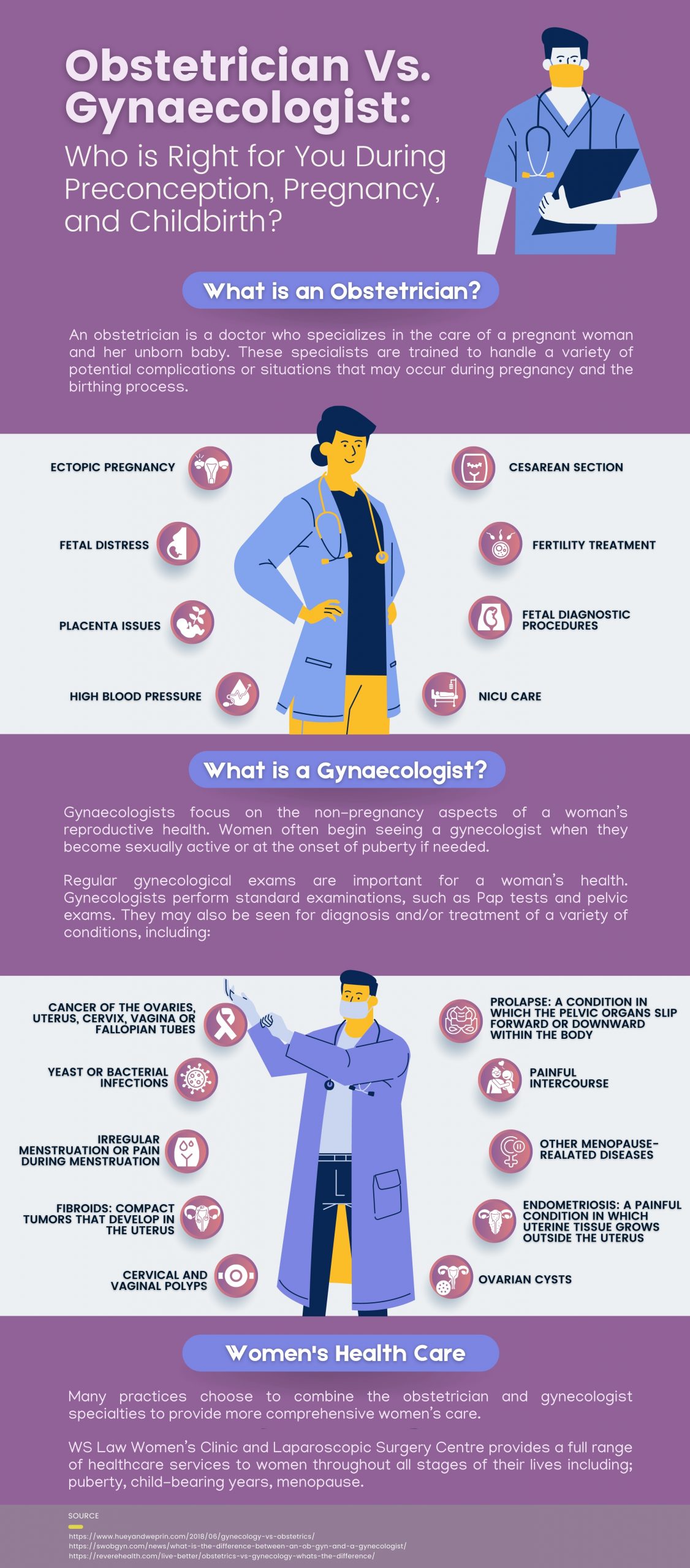
An obstetrician is a medical doctor who specializes in the care of pregnant women and the management of all aspects of pregnancy, childbirth, and the postpartum period. Obstetricians are trained to treat pregnant women and monitor both maternal and fetal health throughout the entire birthing process.
To become an obstetrician, a doctor must graduate from an accredited medical school, complete four years of residency in obstetrics and gynecology, and gain hands-on experience managing normal and high-risk pregnancies. Some may pursue further training in maternal fetal medicine to manage complex or high-risk cases.
When to See an Obstetrician
You should visit an obstetrician if you are:
- Planning a pregnancy and seeking preconception care
- Currently pregnant and require regular prenatal care
- Experiencing pregnancy complications
- Preparing for labor and delivery
- Recovering after childbirth and need postpartum care
Conditions Treated by Obstetricians
Obstetricians manage pregnancy-related health issues, including:
- Ectopic pregnancy
- High-risk pregnancies
- Fetal distress
- Cesarean sections and other surgical procedures
Obstetricians provide care during all stages of pregnancy, ensuring the safety of both mother and baby from conception through recovery.
What Is a Gynecologist?
A gynecologist is a medical doctor who focuses on the health of the female reproductive system, including the uterus, ovaries, fallopian tubes, cervix, and vagina. Gynecology deals with non-pregnancy-related aspects of women’s reproductive health from puberty through menopause and beyond.
Gynecologists diagnose and treat reproductive system disorders, manage hormonal conditions, and provide preventive care that helps women maintain their overall reproductive health throughout life.
When to See a Gynecologist
You should see a gynecologist for:
- First reproductive health visits during puberty (especially for young women)
- Menstrual concerns, such as irregular or heavy periods
- Sexual health issues, including pain during intercourse and STD screening
- Fertility consultations and reproductive endocrinology concerns
- Menopause symptom management
- Routine pelvic exams and Pap smears
Conditions Treated by Gynecologists
Gynecologists commonly treat:
- Polycystic Ovary Syndrome (PCOS)
- Endometriosis
- Uterine fibroids
- Ovarian cysts
- Vaginal infections
- Urinary tract infections and urinary incontinence
They also provide screenings for serious conditions such as cervical cancer and may work alongside specialists in gynecologic oncology when advanced care is needed.
Key Differences Between Obstetricians and Gynecologists
Focus Areas
The primary difference lies in their focus:
- Obstetricians specialize in pregnancy, childbirth, and postpartum recovery.
- Gynecologists focus on long-term reproductive health and conditions affecting the woman’s reproductive organs.
Scope of Practice
- Obstetricians manage pregnancy-related health issues and deliver babies.
- Gynecologists address broader reproductive health issues outside of pregnancy, including hormonal disorders and infections.
Treatment Phases
- Obstetric care is often temporary, limited to pregnancy and childbirth.
- Gynecologic care is ongoing, supporting women from adolescence through menopause and beyond.
Both specialties work together to treat health issues that affect women across different life stages.
When to Visit an Obstetrician vs. a Gynecologist
Routine Gynecology Appointments
You should visit a gynecologist for:
- Annual reproductive health exams
- Birth control counseling
- Menstrual and hormonal concerns
- Preventive screenings for breast health and cervical cancer
Gynecologists provide long-term care and often serve as primary care physicians for many women.
Pregnancy-Related Appointments
An obstetrician should be consulted when:
- You become pregnant
- You need ongoing prenatal monitoring
- You are preparing for delivery
- You require postpartum support after childbirth
Obstetricians focus on ensuring safe outcomes for pregnant mothers and their babies.
Importance of Regular Health Check-ups with OB/GYNs
Regular health check-ups with obstetricians and gynecologists are essential even when no symptoms are present. Preventive visits help detect early signs of reproductive system disorders, manage risk factors, and support long-term overall reproductive health.
Routine OB/GYN check-ups help to:
- Monitor women’s reproductive health across different life stages
- Detect early signs of conditions such as cervical cancer.
- Address common women’s health issues like hormonal imbalance, pelvic pain, or fertility concerns.
- Support breast health and appropriate screening.
- Identify and manage urinary tract infections and urinary incontinence, which affect many women.
OB/GYN care evolves with age, from education and menstrual health in adolescence, to fertility and pregnancy support, and later to menopause management. Regular visits ensure issues are treated early rather than when symptoms become severe.
Can One Doctor Do Both?
Yes. Many doctors like Dr Law Wei Seng are trained as obstetricians and gynecologists, commonly known as OB/GYNs or obstetrician-gynecologists. These professionals provide comprehensive care across both specialties, making it easier for patients to receive continuous, personalized care.
OB/GYNs:
- Provide prenatal and postpartum care
- Conduct routine gynecologic check-ups
- Perform diagnostic tests and surgeries
- Offer preventive services such as immunizations and birth control
- Treat urinary and reproductive system conditions
Because OB/GYNs are trained in both fields, many women rely on them for lifelong care rather than switching between specialists.
Take the Next Step Toward Better Women’s Health
Understanding the difference between an obstetrician and a gynecologist empowers women to make better healthcare decisions. Obstetricians specialize in pregnancy and childbirth, while gynecologists focus on long-term reproductive health and disease prevention. Together, these specialties form the foundation of comprehensive women’s healthcare.
Whether you are planning a family, managing reproductive health issues, or seeking preventive care, consulting an experienced OB/GYN ensures you receive expert guidance tailored to your needs. Schedule a consultation today with Dr Law Wei Seng to take the step toward better women’s health outcomes.
Frequently Asked Questions (FAQs)
What is the difference between an obstetrician and a gynecologist?
The main difference between obstetrics and gynecology is the type of care provided. Obstetricians focus on pregnancy-related care, including prenatal care, childbirth, and postpartum care. Gynecologists focus on non-pregnancy reproductive health, such as menstrual issues, contraception, fertility, menopause, and reproductive system disorders.
Should I see an obstetrician or a gynecologist if I am not pregnant?
If you are not pregnant, you should see a gynecologist for routine check-ups, contraception, menstrual concerns, fertility assessments, sexual health issues, or menopause management. Gynecologists manage the overall health of the female reproductive system throughout a woman’s life.
Can one doctor provide both obstetric and gynecologic care?
Yes. Many doctors are trained as obstetrician gynecologists (OB/GYNs). An OB/GYN is a medical doctor trained in both obstetrics and gynecology, allowing them to provide comprehensive care for pregnancy and non-pregnancy reproductive health needs under one practice.
How often should I have a health check-up with an OB/GYN?
Most women are advised to see an OB/GYN at least once a year for preventive care and screening. Regular check-ups help detect reproductive health issues early, support long-term women’s health, and reduce the risk of serious conditions such as cervical cancer.
When should young women start seeing a gynecologist?
Young women are generally encouraged to begin seeing a gynecologist between the ages of 13 and 15, especially after the onset of menstruation or if they experience severe cramping, irregular periods, or other reproductive health concerns.
Who should I consult for pregnancy care in Singapore?
For pregnancy planning, prenatal care, childbirth, and postpartum care, you should consult an obstetrician or an OB/GYN. At Mt Elizabeth Novena Hospital in Singapore, Dr Law Wei Seng provides comprehensive pregnancy and women’s health care across all stages.