

Finding out that you have an ovarian cyst can feel worrying, especially if it was discovered during an ultrasound or after symptoms such as pelvic pain, bloating, or irregular bleeding.
The good news is that ovarian cysts are common, and many are not dangerous. Some ovarian cysts may resolve on their own within a few months, while others may require monitoring or treatment, depending on their size, appearance, symptoms, and any concerning features.
At Dr Law Wei Seng’s clinic, ovarian cyst treatment begins with a proper understanding of the cyst. A small, simple cyst with no symptoms may only need follow-up, while a larger, painful, persistent, or complex cyst may need closer assessment or surgical treatment.
What Is an Ovarian Cyst?
An ovarian cyst is a fluid-filled sac that develops on or inside the ovary. Some cysts are related to the menstrual cycle and may resolve on their own. Others may be non-functional cysts, such as dermoid cysts, endometriomas, cystadenomas, or complex cysts, which may need closer assessment depending on their features.
Ovarian cysts can affect women differently. Some women have no symptoms and only discover the cyst during a routine scan. Others may experience pain, pressure, bloating, or menstrual changes.
The purpose of ovarian cyst treatment is not always to remove the cyst immediately. In many cases, the first step is to understand the cyst type, size, symptoms, and ultrasound appearance before deciding whether monitoring or treatment is needed.
Common Ovarian Cyst Symptoms
Many ovarian cysts do not cause symptoms. Symptoms are more likely when a cyst becomes large, ruptures, or twists and affects the blood supply to the ovary.
Common ovarian cyst symptoms may include:
- Pelvic pain
- Lower abdominal discomfort
- Bloating or swelling
- A feeling of pressure in the pelvis
- Pain during sex
- Difficulty emptying the bowels
- Irregular, heavy, or unusual periods
- Frequent urination if the cyst presses on the bladder
These symptoms do not always confirm the type of cyst. A proper gynaecology assessment and ultrasound can help clarify whether an ovarian cyst is present and whether treatment is needed.
How Ovarian Cysts Are Diagnosed at Dr Law Wei Seng Clinic

Ovarian cyst diagnosis usually involves a combination of symptom review, medical history, pelvic assessment, ultrasound, and sometimes blood tests.
The goal is not only to confirm the presence of a cyst. The more important questions are:
- What type of cyst might it be?
- Is it simple or complex?
- How large is it?
- Is it causing symptoms?
- Is it growing or changing?
- Are there any concerning features?
- Does the patient want to preserve fertility?
Symptom Review and Medical History
Dr Law Wei Seng may ask about your pain pattern, menstrual cycle, bleeding changes, fertility concerns, previous ovarian cysts, previous scan results, and relevant medical history.
This helps place the ultrasound findings into context. For example, a cyst found in a woman with no symptoms may be managed differently from a cyst causing persistent pain.
Pelvic Examination
A pelvic examination may be performed when appropriate to check for tenderness, swelling, or possible pelvic masses.
This is only one part of the assessment. Most ovarian cysts still need imaging, especially ultrasound, for better characterisation.
Pelvic Ultrasound
A pelvic ultrasound is commonly used to assess ovarian cysts. It helps identify the cyst’s size, location, appearance, and whether it looks simple or complex. If there is concern that the cyst may be more serious, blood tests may also be arranged as part of further evaluation.
An ultrasound can help guide whether the cyst can be monitored or whether further tests or treatment may be needed.
Blood Tests
Blood tests may be recommended in selected cases, especially if there are concerning ultrasound features or if further evaluation is needed.
Blood tests do not replace ultrasound findings. They are interpreted together with symptoms, scan results, age, medical history, and clinical assessment.
Further Imaging if Needed
If ultrasound findings are unclear, further imaging such as MRI or CT may be considered. This depends on the cyst features and Dr Law Wei Seng’s assessment.
Not every ovarian cyst needs advanced imaging, but it may be helpful in selected cases.
Ovarian Cyst Treatment Options at Dr Law Wei Seng Clinic in Singapore
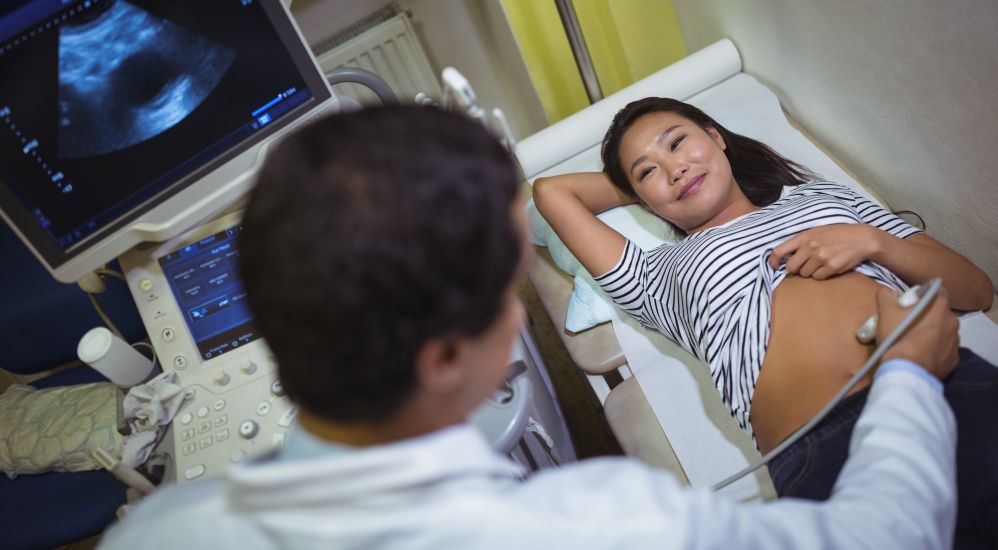
Ovarian cyst treatment depends on the cyst type, size, symptoms, ultrasound appearance, age, fertility plans, and risk assessment.
Not every cyst needs surgery. Some cysts only need monitoring, while others may require removal. Treatment decisions usually depend on whether the cyst is large, persistent, causing symptoms, or has concerning features.
Observation and Follow-Up Ultrasound
If the cyst is small, not causing symptoms, and does not have suspicious features, Dr Law Wei Seng may recommend observation.
This usually means arranging a follow-up ultrasound after a period of time to check whether the cyst has resolved, reduced, remained stable, or grown.
Observation can be a suitable approach when immediate treatment is not necessary.
Medication and Symptom Management
Medication may be used to manage symptoms such as pain or discomfort.
In some cases, hormonal treatment may be discussed to reduce the recurrence of certain functional cysts. However, medication does not remove every type of ovarian cyst. Non-functional cysts such as dermoid cysts or endometriomas may require a different approach depending on their size, symptoms, and ultrasound features.
This is why treatment should be based on the cyst assessment rather than symptoms alone.
Ovarian Cystectomy
Ovarian cystectomy is a surgical procedure to remove the cyst while preserving normal ovarian tissue, where possible.
This may be especially important for women who are pre-menopausal or who wish to preserve fertility and ovarian hormone function. In suitable cases, only the cyst is removed while the ovary is left intact.
The suitability of cystectomy depends on the cyst type, size, location, and how much healthy ovarian tissue can be preserved.
Laparoscopic Ovarian Cyst Surgery
Laparoscopic ovarian cyst surgery is also known as keyhole surgery. It is performed through small cuts using a camera and specialised instruments.
When suitable, many ovarian cysts can be removed using laparoscopy. Keyhole surgery may be preferred where appropriate because it involves smaller cuts and may be associated with less pain and quicker recovery compared with open surgery.
However, laparoscopy may not be suitable for every case. The decision depends on cyst size, cyst appearance, surgical complexity, and cancer risk assessment.
Open Surgery or Oophorectomy in Selected Cases
Open surgery may be recommended if the cyst is very large, technically difficult to remove by laparoscopy, or has suspicious features.
In selected cases, the ovary may need to be removed. This is called oophorectomy. It may be considered if the ovary cannot be safely preserved, if the cyst has replaced most of the ovarian tissue, or if there is a higher concern for malignancy.
This does not mean every ovarian cyst requires removal of the ovary. Many cysts can be managed with monitoring or cystectomy, depending on the situation.
When Is Surgery Recommended for an Ovarian Cyst?

Surgery may be considered when an ovarian cyst is unlikely to resolve naturally, is causing symptoms, or has features that need closer assessment.
Dr Law Wei Seng may discuss surgery if:
- The cyst causes persistent pain or discomfort
- The cyst is growing
- The cyst is large
- The cyst persists after monitoring
- The cyst has complex or abnormal ultrasound features
- There is concern about ovarian torsion or rupture
- Cancer risk needs to be excluded
- The cyst affects fertility planning or treatment decisions
Large or persistent ovarian cysts, or cysts that are causing symptoms, may need surgical removal.
Surgery should be planned based on the full clinical picture, not the cyst size alone.
Ovarian Cyst Treatment and Fertility Preservation
Many women worry that ovarian cyst surgery may affect fertility. This is a valid concern, especially for women who are planning a pregnancy or have not completed their family.
In suitable cases, ovarian cystectomy aims to remove the cyst while preserving as much healthy ovarian tissue as possible. Fertility-related decisions may depend on:
- Age
- Ovarian reserve
- Cyst type
- Cyst size
- Whether one or both ovaries are affected
- Previous ovarian surgery
- Pregnancy plans
- Whether the cyst is an endometrioma
- Whether surgery is urgent or planned
Some cysts, such as endometriomas, may require a more careful fertility discussion because they can be linked to endometriosis and may affect fertility planning.
If fertility is important to you, it is helpful to discuss this clearly during the consultation before deciding on treatment.
Ovarian Cyst Emergency Symptoms: When to Seek Urgent Care
Most ovarian cysts are not emergencies. However, some symptoms should be assessed urgently.
Seek urgent medical attention if you experience:
- Sudden severe pelvic pain
- Pelvic pain with nausea or vomiting
- Fever
- Fainting or dizziness
- Heavy bleeding
- Severe pain with possible pregnancy
- Pain that feels much worse than usual
- Weakness or symptoms that feel severe or unusual
Urgent symptoms may suggest complications such as cyst rupture or ovarian torsion and should not be ignored.
If the pain feels sudden, intense, or unusual, do not wait for a routine appointment.
What to Expect During an Ovarian Cyst Consultation
During an ovarian cyst consultation, Dr Law Wei Seng will usually start by understanding your symptoms and reviewing any previous scan reports.
The consultation may include:
- Symptom and menstrual history review
- Review of previous ultrasound or imaging reports
- Pelvic examination where appropriate
- Pelvic ultrasound if needed
- Discussion of cyst type, size, and features
- Assessment of whether monitoring or treatment is suitable
- Fertility and pregnancy planning discussion
- Review of treatment options
- Follow-up plan
If surgery is being considered, Dr Law Wei Seng may explain the surgical approach, expected recovery, fertility considerations, possible risks, and whether laparoscopy or open surgery is more appropriate.
The aim is to help you understand your cyst clearly so that treatment decisions feel less uncertain.
Book an Ovarian Cyst Consultation at Dr Law Wei Seng in Singapore
If you have been diagnosed with an ovarian cyst or are experiencing pelvic pain, bloating, irregular bleeding, or sudden worsening symptoms, a gynaecology consultation can help clarify the diagnosis and treatment options.
Dr Law Wei Seng can assess the cyst type, size, symptoms, ultrasound features, fertility considerations, and whether monitoring or treatment may be needed.
Frequently Asked Questions
Do all ovarian cysts need treatment?
No. Some small cysts may be monitored if they are asymptomatic and show no suspicious features.
Treatment depends on cyst size, type, symptoms, ultrasound appearance, age, and risk assessment.
Can ovarian cysts go away on their own?
Some ovarian cysts may go away naturally, especially cysts related to the menstrual cycle. However, not all cyst types go away on their own.
Dermoid cysts, endometriomas, and other non-functional cysts may need monitoring or treatment depending on their features.
When is ovarian cyst surgery needed?
Surgery may be recommended if the cyst is symptomatic, persistent, growing, large, complex, or has concerning features.
Surgery may also be discussed if the cyst could affect fertility planning or if cancer risk needs to be excluded.
Is laparoscopic surgery suitable for ovarian cysts?
Laparoscopy may be suitable when the cyst can be removed safely through keyhole surgery, and there is no high concern for malignancy.
The best approach depends on cyst size, ultrasound features, symptoms, surgical complexity, and Dr Law Wei Seng’s assessment.
Can ovarian cyst surgery preserve fertility?
In many pre-menopausal women, cystectomy aims to remove the cyst while preserving ovarian tissue where possible.
If fertility is a concern, it should be discussed before treatment so that the surgical plan can take this into account, where clinically appropriate.
Is an ovarian cyst the same as PCOS/PMOS?
No. An ovarian cyst and PCOS/PMOS are different conditions.
PMOS, formerly known as PCOS, is a polyendocrine metabolic disorder that can affect hormone balance, ovulation, menstrual cycles, skin, hair growth and metabolic health. An ovarian cyst, on the other hand, is a cyst or growth that forms on or within the ovary.
Although both conditions involve the ovaries, they have different causes, symptoms, diagnosis methods and treatment approaches. A proper gynaecology assessment can help determine whether the concern is an ovarian cyst, PMOS/PCOS, or another condition.
What happens if an ovarian cyst is left untreated?
It depends on the cyst type, size, symptoms, and ultrasound features.
Some cysts may resolve naturally. Others may persist, grow, cause pain, or lead to complications such as torsion or rupture. This is why follow-up is important if Dr Law Wei Seng recommends monitoring.